Arkansas asks Supreme Court to revive restrictive voter registration rule
 Prefer us on Google
to see more of our voting rights news coverage when you search.
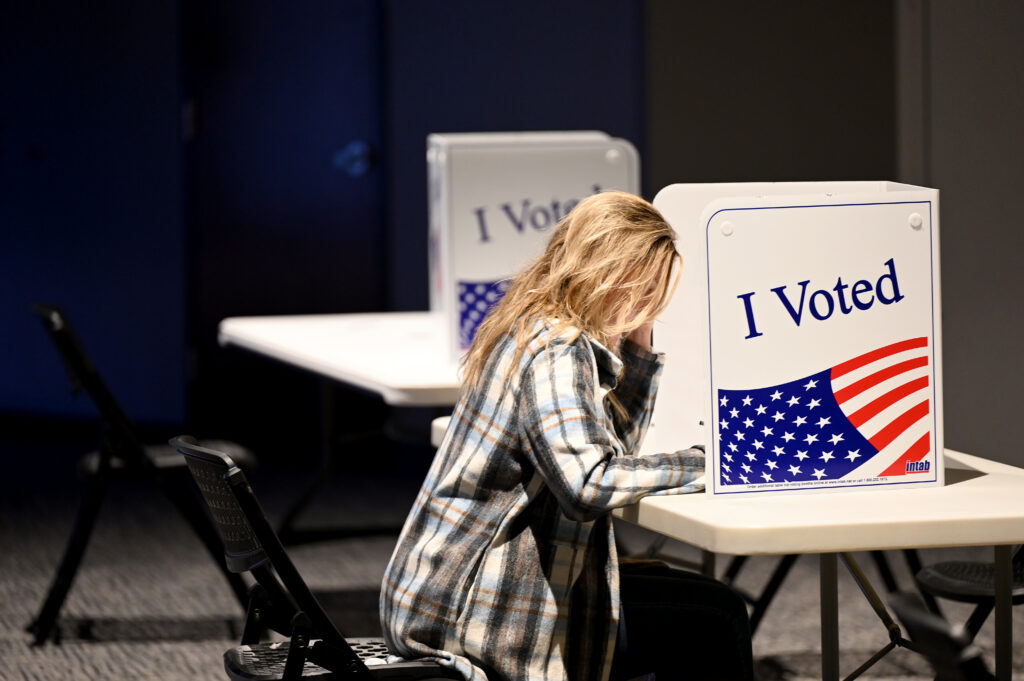
Arkansas is asking the U.S. Supreme Court to revive a restrictive rule that would require a handwritten “wet signature” when registering to vote.
Secretary of State Cole Jester (R) and members of the state’s election board filed a petition Friday with the nation’s highest court protesting an Eighth Circuit Court of Appeals block on the measure.
They argue the appeals court’s decision “prevents Arkansas from enforcing an evenhanded voter registration law that ensures uniform statewide procedures … and preserves the integrity of Arkansas elections.”
Pro-voting groups challenged the rule in the run-up to the 2024 general election, alleging that the board’s prohibition on electronic signatures was a response to reports of how successful the groups had been in digitally helping register young and minority voters.
Arkansas is one of just eight states that don’t offer online voter registration. The state’s request for the Supreme Court to revive the restriction likely won’t have an impact on the midterm elections, as the deadline to register to vote was Oct. 5.
Get updates straight to your inbox — for free
Join 350,000 readers who rely on our daily and weekly newsletters for the latest in voting, elections and democracy.
The pro-voting groups argued that the “wet signature” requirement violates the Materiality Provision of the Civil Rights Act of 1960, which prevents states from denying people the right to vote over insignificant details or mistakes.
The appeals court held that the type of signature on a voter registration form is immaterial in determining whether an applicant is qualified to vote under Arkansas law.
In their petition to the U.S. Supreme Court, Arkansas officials continued to assert the “wet signature” mandate is needed to prevent voter fraud.
“The Materiality Provision protects voters from disqualification over genuinely irrelevant mistakes,” Jester and the board wrote. “It should not disable States from adopting evenhanded measures reasonably connected to authenticating important documents, identifying individuals, and preventing election fraud.”
The Eighth Circuit had rejected this argument, stating the state provided “no evidence” to support its claims of fraud.
“The record shows that county clerks do not analyze original wet signatures from registration forms in an effort to detect fraud,” the Eighth Circuit ruling said. “Even if county clerks did attempt to analyze signatures, the law allows a voter to register without signature by making a simple mark such as an ‘X’ on the form. State law and practice thus do not employ a wet signature requirement as a means to detect fraud, and the absence of a handwritten signature is not material on this record in determining whether a person is qualified to vote.”