GOP fast tracks monster voter suppression bill that could disenfranchise millions by requiring proof of citizenship at polls
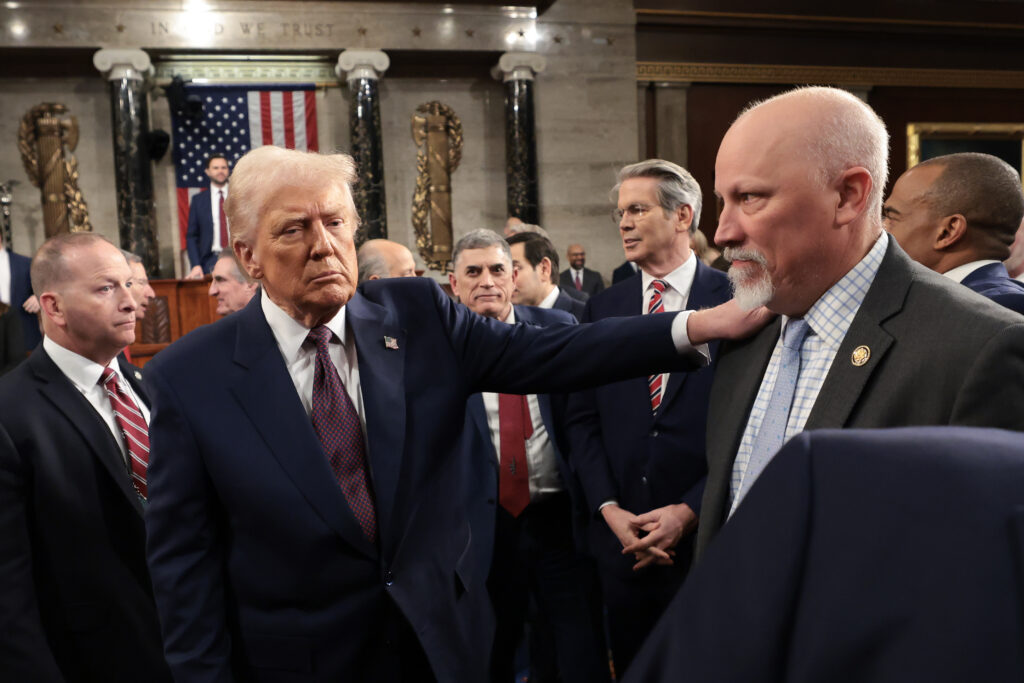
Republicans are moving quickly to pass a bill requiring voters to show proof of citizenship both to register and at the polls ahead of the 2026 midterm elections — a move that experts warn could disenfranchise millions of Americans.
Rep. Chip Roy (R-Texas), the sponsor of the Safeguard American Voter Eligibility (SAVE) America Act, said in a social media video Thursday night that House leadership would bring the proposal up for a vote next week.
The bill would require documentary proof of citizenship to register to vote, as well as requiring photographic identification that proves citizenship to cast a ballot. In most states, that means voters, even those who are already on the rolls, would need to bring a passport or original birth certificate to the polls. Only states with ‘enhanced’ driver licenses — Michigan, New York, Vermont, Minnesota and Washington — satisfy the SAVE America Act’s heightened requirements — a REAL ID (used in most states) won’t cut it.
Get updates straight to your inbox — for free
Join 350,000 readers who rely on our daily and weekly newsletters for the latest in voting, elections and democracy.
The strict ID rules could keep millions of already-registered Americans who don’t have that documentation on hand from casting ballots. According to a Brennan Center for Justice analysis, around 21 million Americans could be disenfranchised. Half of Americans lack a passport, and millions more don’t have ready access to birth certificates to prove citizenship. The bill could also kick millions of married women who took their husband’s last name off the rolls.
The proposal would also require state election officials to aggressively scrub their voter rolls, which, history shows, would lead to thousands of improper cancellations of legitimate eligible voter registrations.
The House passed a similar version, aimed just at registrations, last spring, which was also sponsored by Roy. That less expansive SAVE Act was described to Democracy Docket by one historian as “the most extraordinary attack on voting rights in American history.”
Republican backers say the measures are necessary to keep noncitizens from voting. But noncitizen voting is a crime that is easily caught and prosecuted, which is perhaps one reason why it’s exceedingly rare. Recent lengthy reviews of voter rolls conducted by Republican election administrators have turned up precious few instances of noncitizens even on the rolls, let alone voting. Meanwhile, registration file purges have improperly kicked thousands of legal voters off the rolls.
In the past few weeks, passing the legislation has been a unifying rally cry for Republicans, a welcome distraction from the party’s cratering public opinion polls.
President Donald Trump has been one of the measure’s loudest backers, frequently demanding Congress pass the bill on social media. On Thursday, Trump met with Sen. Mike Lee (R-Utah), the bill’s sponsor in the Senate, along with Sens. Rick Scott (R-Fla.) and Ron Johnson (R-Wisc.).
Despite the sudden sense of SAVE America Act unity, there are still major hurdles to its passage in the Senate. Even if all 53 Republicans vote for it, unified Democratic opposition means the measure will fall short of the 60-vote threshold to break a filibuster.
But Lee has pushed hard to kill the “zombie filibuster,” and replace it with a talking filibuster — the kind featured in Mr. Smith Goes to Washington, which would allow a bill’s opponents to prevent a vote only for as long as they can keep speaking against it. Sen. Ted Cruz (R-Texas) recently told reporters he backed that idea.
Thune said he would “consider” that, but in an interview with NBC News, he laid out arguments against it, saying it would eat up a huge amount of floor time.
“We will vote on the SAVE Act,” Thune said. “But exercising or triggering a talking filibuster has ramifications, implications that I think everybody needs to be aware of. So we will have those discussions. But that obviously ties the floor up for an indefinite amount of time, with not only unlimited debate, but also unlimited amendments, all of which can reset the clock.”
Separately, the House Administration Committee is scheduled to hold a hearing on Chairman Bryan Steil’s Make Elections Great Again (MEGA) Act on Tuesday. The Wisconsin Republican’s proposal takes the text of the SAVE America Act and adds provisions that would force states to end universal vote-by-mail, ban mail-in ballot grace periods, restrict third-parties from helping voters cast ballots, and proscribe ranked-choice voting. Unlike the SAVE America Act, that bill would take effect in 2027, not upon enactment.
When the House passed the narrower SAVE Act in April with a 220-208 vote, four Democrats — Reps. Ed Case of Hawaii, Henry Cuellar of Texas, Jared Golden of Maine and Marie Glusenkamp Perez of Washington — supported it. Those Democrats have not responded to inquiries on their position on the SAVE America Act.
Since that vote last year, the GOP’s margins in the House have slipped due to resignations and special elections. Speaker Mike Johnson (R-La.) can now only afford one Republican defection on party-line votes.
The coordinated congressional campaign to make voting more difficult comes as the White House has made a series of alarming statements telegraphing its intent to interfere with the 2026 midterm elections.
Trump himself has said he wants to “take over” elections in 15 jurisdictions, and “nationalize” them. While Senate Majority Leader John Thune (R-S.D.) gently rebuked those remarks, Johnson welcomed them, spreading baseless claims about “fraudulent” elections. Trump’s close advisor, Steve Bannon, said the administration would deploy Immigrations and Customs Enforcement (ICE) agents to polling places, and on Thursday, White House press secretary Karoline Leavitt said she “can’t guarantee” that they won’t.
As Sen. Thom Tillis (R-N.C.) noted, there are roughly 60 million Hispanics in the United States, and this would have a “chilling effect on even US citizens going to the polls because they don’t want to be detained and have to prove citizenship.”
While the Constitution clearly prohibits any nationalization of elections, and deploying ICE agents to every, or even most, of the nation’s roughly 10,000 polling places would be impossible, strategic efforts to disrupt voting could sway an election.
As Fair Elections Center President Rebekah Caruthers recently told Democracy Docket, Trump can’t take over elections, but he doesn’t need to. “All he has to do is just keep interjecting more friction into the process,” Caruthers said. “Each time you add a new layer, a new barrier, that’s 1%, 2%, 3% of people who might say, ‘it’s not worth it’ or ‘I don’t have time to actually vote.”