In victory for voters, judge orders Trump administration to stop challenging votes with noncitizen lists
 Prefer us on Google
to see more of our voting rights news coverage when you search.
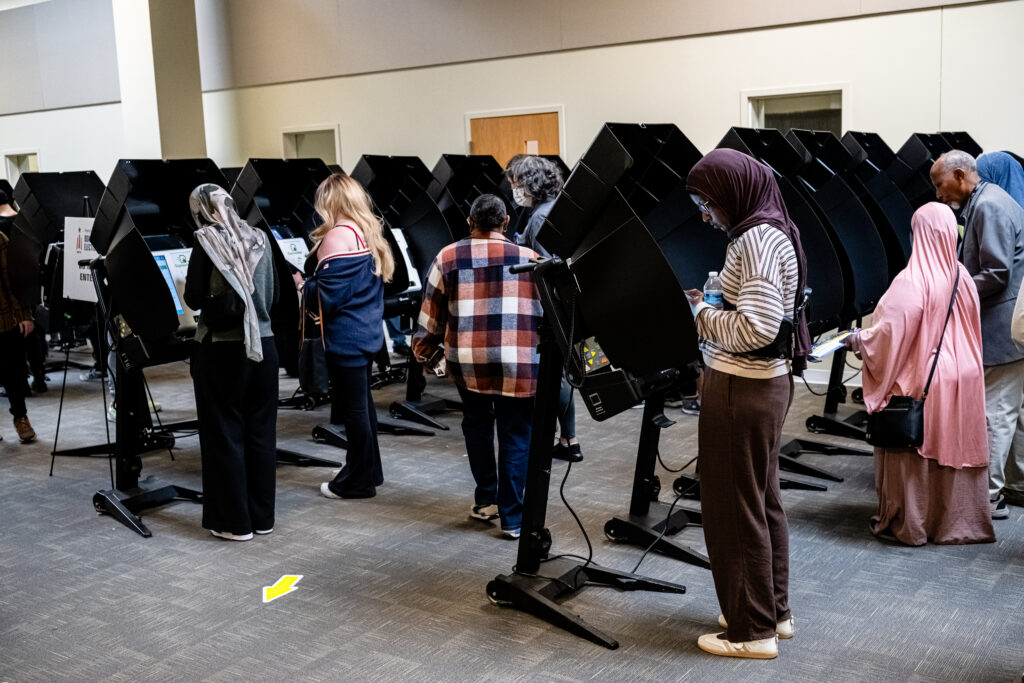
A federal judge ordered the Trump administration to stop pressuring states to investigate, set aside ballots, or refuse to count ballots from people it claims are ineligible to vote in the midterms.
U.S. District Judge Tanya Sue Chutkan, whom former President Barack Obama nominated, found the Trump administration likely violated federal privacy and rulemaking laws by creating and disseminating lists it claims contain noncitizens illegally registered to vote in certain states.
“Federal law places restrictions on how the government may collect, use, store, and disseminate individuals’ personal records,” Chutkan wrote, adding that the Trump administration has “collected millions of voting records—including those of U.S. citizens—in an alleged effort to investigate noncitizen voting.”
“After compiling and analyzing this data, the government is now transmitting selected portions to states and localities responsible for election administration, claiming the individuals are not eligible to vote,” the judge wrote. “They are also requesting that the state electoral officials take action to address the purported risk of noncitizen voting. Election day is tomorrow, and in many states voting is already underway.”
So far, the Trump administration has sent such lists to California and Washington. The Department of Justice (DOJ) challenged nearly 21,000 potential votes in California, but it has suggested it may have identified another 17,000 alleged noncitizens. In Washington, the DOJ demanded that election officials set aside possible ballots from around 400 people it claims are noncitizens.
Get updates straight to your inbox — for free
Join 350,000 readers who rely on our daily and weekly newsletters for the latest in voting, elections and democracy.
However, Chutkan’s sweeping order, issued just hours before Election Day, cripples the Trump administration’s central election-interference mechanisms.
The judge barred the federal government from sharing lists of alleged noncitizen voters with any additional states, localities or outside parties and, critically, blocked it from directing states that already received the list to act on them.
In addition, Chutkan noted that the Trump administration has no statutory authority to collect and analyze troves of voter data. While the Trump administration has attempted to justify its actions by pointing to a law barring noncitizens voting in federal elections, Chutkan noted that the law “contains no language authorizing the broad program of bulk transmission of sensitive voter data for the purposes of intervening in state election procedures.”
Chutkan specified that “the public interest and the balance of the equities weigh heavily in favor of protecting the privacy and voting rights of the millions of Americans whose voter data Defendants have already collected.”
The judge added that the Trump administration’s actions run counter to the “Purcell principle”—an unwritten election-law doctrine that generally holds election rules should not change too close to an election because of the risk of confusion among voters and election officials.
“Here, where the effect of further voter data transmissions and demands from the government may ‘cause widespread confusion among voters and election officials, divert election administration resources, and usher in electoral chaos,’ the Purcell principle counsels for retaining the states’ status quo and enjoining further voter data transmissions,” she wrote.
In issuing the order, the judge sided with the League of Women Voters, the League of United Latin American Citizens and the Electronic Privacy Information Center. The groups are challenging the Department of Homeland Security’s efforts to collect millions of Americans’ voter records as part of a nationwide investigation into unsubstantiated claims of voter fraud.
Court proceedings in other cases have revealed widespread errors in the list of alleged noncitizens the Trump administration sent California election officials. An immigrant rights group reviewed the list and found it contained dozens of naturalized citizens.
The Supreme Court swiftly rejected the Trump administration’s lawsuit against California seeking to bar the state from counting ballots from people it claims are noncitizens.
This story has been updated with additional information throughout.