GOP senators sign off on corrupt immunity deal from IRS audits for Trump and sons
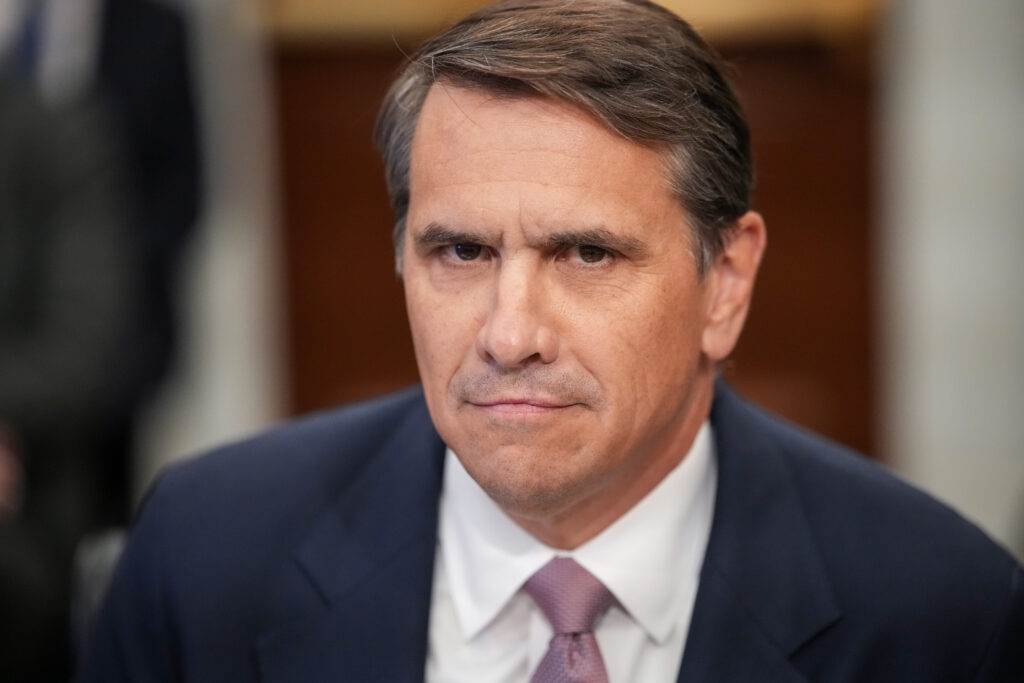
Acting Attorney General Todd Blanche’s nomination to formally lead the Department of Justice (DOJ) appears to be back on track after two Republican holdouts signed off on a deal giving President Donald Trump and his family immunity from Internal Revenue Service (IRS) audits.
The two Republicans, Sens. John Cornyn (Texas) and Thom Tillis (N.C.), said for days that they would not move forward with Blanche’s nomination through the Senate Judiciary Committee until the acting attorney general promised to terminate the president’s $1.8 billion “anti-weaponization fund,” which the DOJ established to settle Trump’s $10 billion lawsuit against the IRS.
Get updates straight to your inbox — for free
Join 350,000 readers who rely on our daily and weekly newsletters for the latest in voting, elections and democracy.
In a social media post Sunday, Blanche, one of Trump’s former defense attorneys, claimed he issued an order doing just that. But he also kept in place a provision of the settlement offering Trump, his two eldest sons and their business broad immunity for past tax-related conduct.
Despite that, the announcement was enough to satisfy Cornyn and Tillis, who said in a joint statement that they were “pleased” by Blanche’s concessions.
The senators previously asked Blanche to confirm that immunity afforded by the settlement isn’t extended to people not involved in Trump’s suit against the IRS and only applies to departments listed as defendants in the suit: the IRS and the Department of the Treasury.
Immunity from IRS audits is an extraordinary protection for a family that has aggressively avoided paying taxes for decades. A previous IRS audit of Trump’s finances could have cost him more than $100 million, according to an analysis of his tax returns in 2020 by the New York Times.
Cornyn and Tillis said they would support Blanche’s nomination even as several legal experts have warned that Blanche’s assurances didn’t mean the fund — which would compensate the president’s political allies, including those who assaulted the U.S. Capitol on Jan. 6, 2021 — was gone for good.
Some have noted that one party to a settlement typically cannot change or cancel the settlement agreement on their own, as such agreements are binding legal contracts.
By unilaterally changing the settlement, Blanche could give the president grounds to sue to force the DOJ to establish the fund.
The settlement document itself states that it “may be modified only with the written agreement of the Parties.”
Trump remains supportive of the “anti-weaponization fund” and has threatened to put it back on the table if Blanche is not confirmed.
Despite Blanche’s new order, nothing bars the DOJ from entering into individual settlements with allies of the president who claim they were unfairly persecuted by the government and sue the department.
In recent months, the DOJ has agreed to pay out millions of dollars to conservative activists, including $5 million to the family of Ashli Babbitt, who was shot and killed by a U.S. Capitol Police officer during the Jan. 6 attack.
Furthermore, nothing prevents Blanche from also potentially resurrecting the fund after his confirmation.
Republicans are hoping to confirm Blanche before the Senate’s August recess. The Senate Judiciary Committee is set to vote Tuesday to advance his nomination.
Blanche’s confirmation would also be an alarming development for voting rights. He previously endorsed sending armed federal agents to voting sites during future elections.
In his confirmation hearing last month, Blanche claimed he would “follow the law” on deploying agents but pointedly stopped short of pledging not to send them to the polls.
Blanche has also spearheaded many of the DOJ’s criminal cases against Trump’s enemies, including its ongoing case against former FBI Director James Comey.