The Supreme Court is letting Trump use a faulty database for purges. What it could mean for voters
 Prefer us on Google
to see more of our voting rights news coverage when you search.
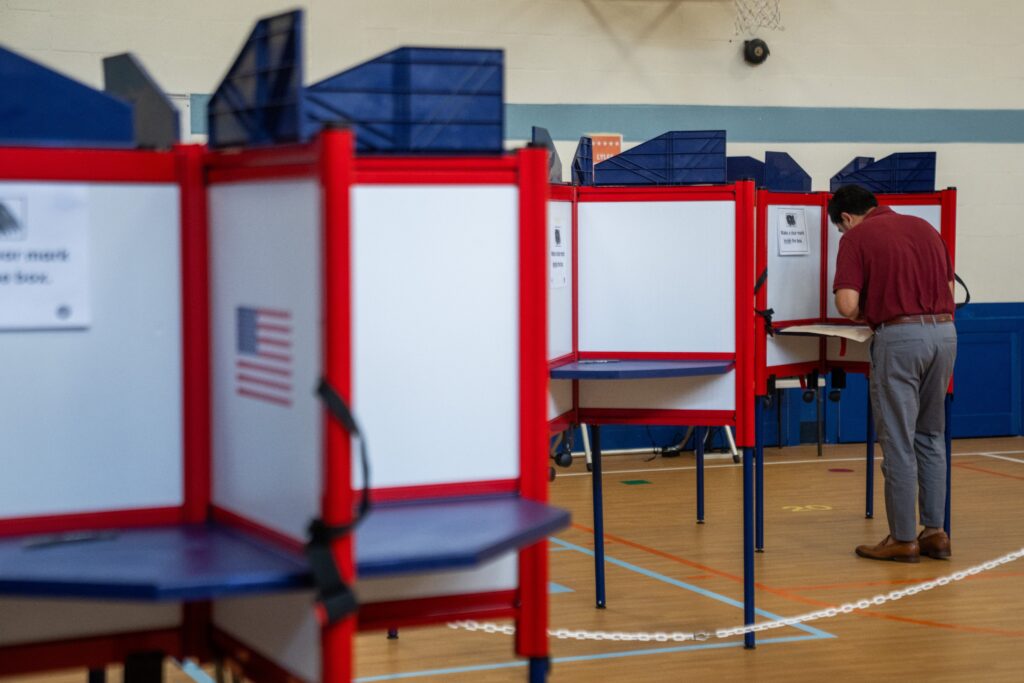
The U.S. Supreme Court revived a flawed citizenship database that states like Texas have used to erroneously kick eligible voters off the rolls.
The Trump administration modified the existing Systematic Alien Verification for Entitlement (SAVE) program to turn it into a massive database to root out allegations of noncitizens voting in elections.
Texas said last year it had used SAVE to identify 2,724 potential noncitizens on its rolls. But it confirmed this week that at least 578 of those — more than one in five — were, in fact, citizens. Most appear to have been naturalized citizens whose status wasn’t updated. Texas instructed counties to reinstate registrations that were wrongly removed during the process.
A federal lawsuit filed against Texas in March by voter advocates alleged that the state had used “unvetted, outdated citizenship data” to remove voters from the rolls, discriminating against naturalized citizens. The court has yet to rule in the case.
Despite the alarmingly high failure rate, the Supreme Court’s conservative majority held the federal government would suffer “irreparable harm” if prevented from its efforts “to assist state and local agencies in the proper administration of the midterm elections,” even though a lower court finding the new system violated privacy laws and other federal statutes.
More than half the country – 27 states – voluntarily uses the modified SAVE system.
Using the SAVE database to purge voting rolls is a key provision of President Donald Trump’s 2025 anti-voting executive order. The revised database links the Department of Homeland Security’s immigration status database to records from the Social Security Administration. Trump’s order also allowed states to submit bulk queries to the SAVE system.
Even before Trump’s overhaul, SAVE had issues just with immigration status checks. One government report found that in 2016, nearly 19% of queries to the database were inconclusive and required additional verification steps.
Get updates straight to your inbox — for free
Join 350,000 readers who rely on our daily and weekly newsletters for the latest in voting, elections and democracy.
The Trump administration, in a filing to the Supreme Court earlier this month, said states made “some 60 million voter-verification queries to SAVE” between January 2025 and April 2026.
Both the court’s majority and dissenting minority signaled the impact would be muted for this fall, citing the National Voter Registration Act (NVRA), which prohibits wholesale systematic voter roll purges within 90 days of an election.
But Rick Hasen, a UCLA law professor and director of the Safeguarding Democracy Project, noted the ruling allows purges using SAVE on a case-by-case basis – and the 90-day so-called “quiet period” carved out by the NVRA is under consideration in a separate case before the court.
“[S]tates can still use the database now for individualized determinations—and a few bold states might try mass purges of purported non-citizens, and see if the Supreme Court would allow it despite the pending case,” Hasen wrote in a blog post on Friday.
Justice Ketanji Brown Jackson, in a dissent joined by her fellow liberal justices, accused the court’s conservative majority of only considering the hardship the government would face – and not that of everyday Americans.
“The harm caused by burdening or disenfranchising even a few lawful voters outweighs the nonexistent harm that the government experiences when it is prevented from taking an action that it likely lacks the authority to take,” she wrote.