Trump administration seeks private contractor to collect voter files nationwide for ‘fraud detection’

The Trump administration is looking for private contractors to collect voter registration and voting history files from across the country for use in federal “fraud detection” work, according to a new government contracting notice published Tuesday.
The proposal represents a potentially significant expansion of the administration’s efforts to collect and analyze state voter data ahead of the 2026 midterm elections and beyond. And it adds to concerns that the government is looking to use federal law enforcement to interfere in the voting process, potentially chilling participation as the midterms approach.
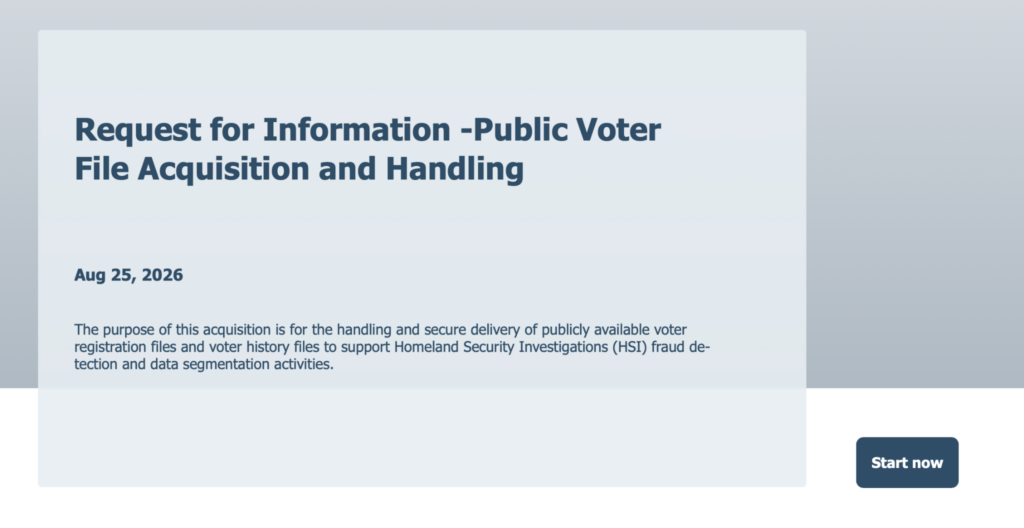
The request, posted by U.S. Immigration and Customs Enforcement (ICE), says Homeland Security Investigations (HSI) wants a contractor to acquire and deliver publicly available voter registration files and voter history records to support HSI “fraud detection and data segmentation activities.”
HSI is the principal criminal investigative arm of ICE, which is part of the Department of Homeland Security (DHS).
Privacy advocates slammed the effort.
“This is just the latest ploy by the Trump administration to hoard voters’ personal data into law enforcement databases, and it’s every bit as illegal and dangerous as the previous attempts,”John Davisson, deputy director of the Electronic Privacy Information Center, told Democracy Docket.
“Neither DHS or any other agency has the authority to amass a nationwide database of voter information, particularly not when those records will be used to fuel politically motivated fishing expeditions and advance repeatedly debunked conspiracy theories about rampant voter fraud,” Davisson added. “The proposal violates the Privacy Act and other related federal laws, and it would create intolerable risks to privacy, security, and voting rights.”
This isn’t the first time HSI has been enlisted in the administration’s multi-pronged campaign to obtain voting information. Agents from the unit accessed voter files in counties in Texas and North Carolina, according to a June Axios report.
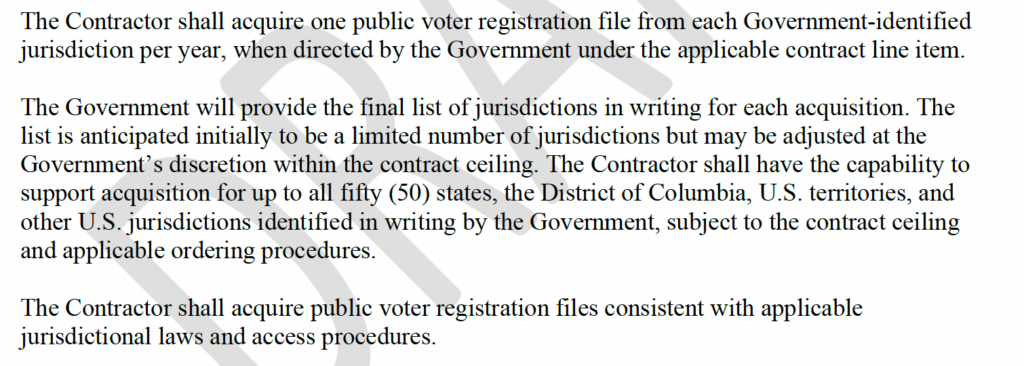
A draft “statement of work” attached to the notice says the contractor would be expected to collect voter files from jurisdictions identified by the government and could eventually be required to support acquisitions from all 50 states, Washington, D.C., U.S. territories and other jurisdictions.
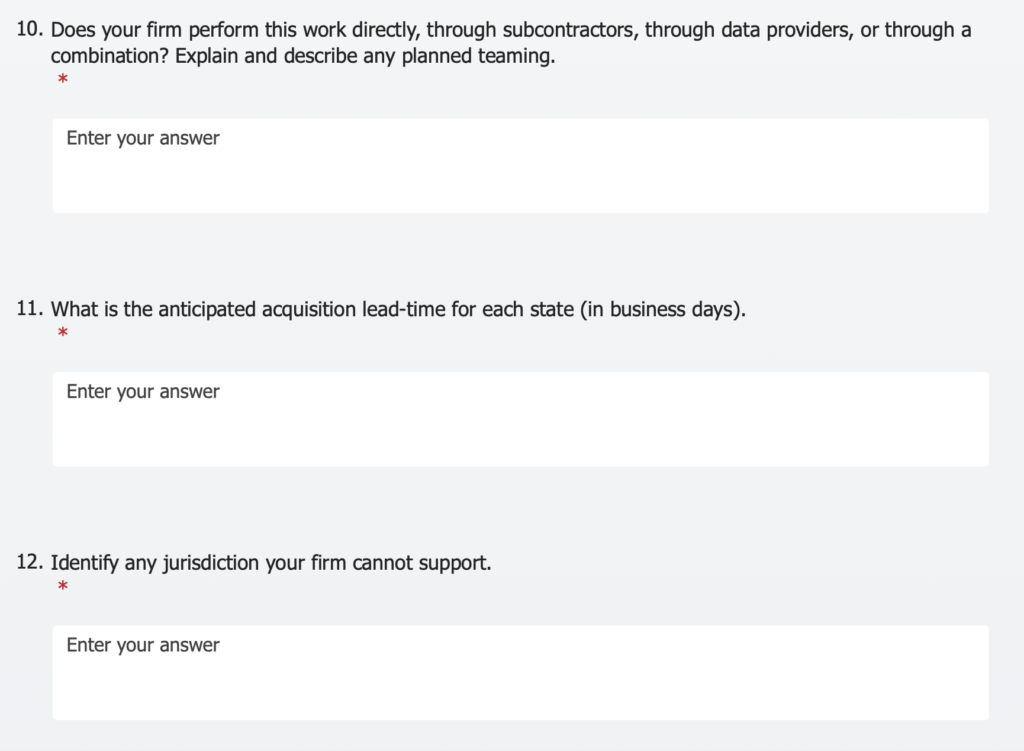
A separate questionnaire for prospective vendors shows DHS is already probing the logistics of a potentially nationwide operation.
The agency asks companies how quickly they could acquire records from each state, which jurisdictions they could not serve, whether they would rely on subcontractors or outside data providers and whether the government should pay on a per-state or per-jurisdiction basis.
The notice is only a request for information, or RFI, meaning DHS has not yet awarded a contract or formally committed to hiring a vendor. The agency says it is conducting “market research” and asking prospective contractors to provide information that could help shape a future acquisition strategy.
Responses are due Friday afternoon.
Under the draft plan, a contractor would obtain at least one public voter registration file each year from every jurisdiction selected by DHS. It would also acquire separate voter history files, where available, for federal general, primary, runoff and special elections.
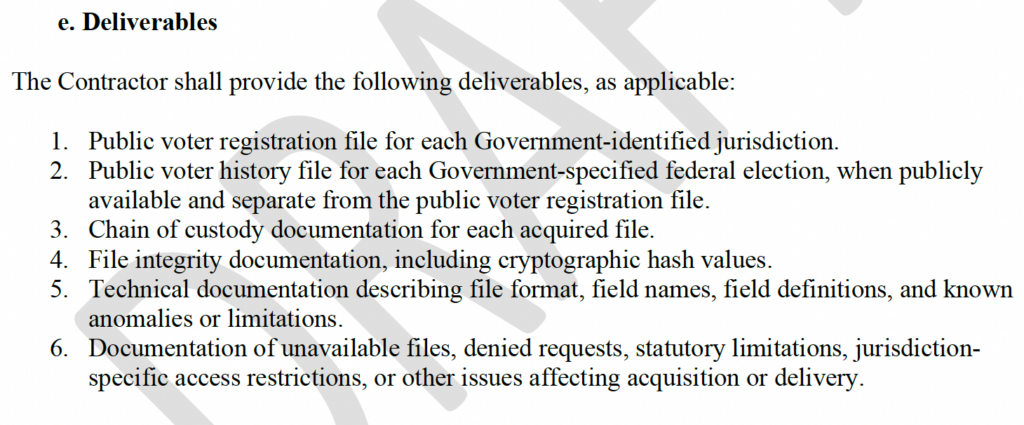
The contractor would then transmit those records to HSI while maintaining detailed chain-of-custody documentation, including the source and date of each file, “cryptographic hash values” used to verify that records were not altered and any processing performed before delivery.
In one of the more unusual provisions, DHS says it could authorize a private contractor to act as its designated acquisition agent in states where voter data is restricted for commercial users but available for law-enforcement purposes.
“Where state laws restrict commercial data access but allow law enforcement use, DHS will provide official ‘Government Interest’ / ‘Need-to-Know’ authorization letters to the state on behalf of the contractor,” the draft says. The arrangement, DHS adds, would allow the vendor to clear those legal restrictions “while maintaining the commercial contract structure.”
The proposal instructs any future contractor not to target or prioritize jurisdictions based on political characteristics and would generally bar the collection or delivery of party-affiliation data unless specifically authorized in writing.
Davisson noted that by outsourcing the effort to a private vendor, DHS may be aiming to get around state laws limiting who can obtain voter data and how it can be used. “Handing a piece of paper to the vendor that asserts a “need-to-know” doesn’t magically make any of this legal,” he added.
The new effort comes as the administration has been aggressively seeking access to state voter files through several different channels.
The Department of Justice (DOJ) has separately sued states that refused to turn over unredacted voter-registration databases containing sensitive personal information. Those cases involve a different category of data and a different legal theory: the new HSI contracting proposal is focused on publicly available voter files rather than the fully unredacted records DOJ has sought in court.
DHS did not explain in the notice what specific fraud it intends to investigate with the voter files or what it means by “data segmentation.”
The agency also did not say which federal databases, if any, would be used alongside the state voter records, which jurisdictions it intends to target first, or whether information produced through the program would be shared with other federal agencies.
DHS did not respond to a request for comment.
The documents do make clear that HSI is exploring a system designed to make the acquisition of voter records a recurring operation rather than an ad hoc project.
The draft calls for annual voter-file acquisition, standardized documentation, secure transfer procedures and the capability to scale the program nationwide.