Trump DOJ demanded California vet 20,000 voters within 48 hours, before suing
 Prefer us on Google
to see more of our voting rights news coverage when you search.
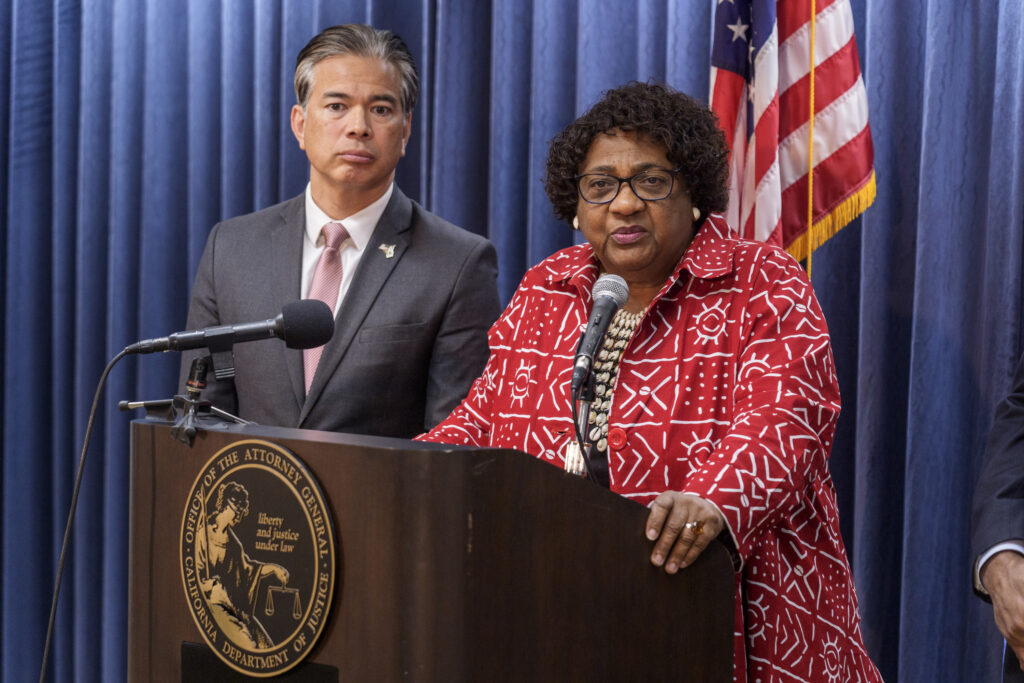
The Department of Justice (DOJ) gave California just two days to review more than 20,000 voters it claimed may be noncitizens, threatening to sue if election officials did not act in time.
But days later, after suing California, the DOJ acknowledged in court that investigating that many people before Election Day would be too much even for the federal government.
“It is not practicable or feasible for the United States to investigate before the 2026 election concludes thousands, let alone tens of thousands, of individuals” identified by federal agencies as likely noncitizens, the DOJ wrote Thursday in its lawsuit against California.
Yet that is effectively the task the DOJ had just imposed on California.
“More remarkable still, despite failing to send the list of alleged non-citizens to my office, you demand that we request transmittal of the list, review and confirm the citizenship status of each of the approximately 20,000 individuals on the list on the eve of an election and within a mere 48 hours,” California Secretary of State Shirley Weber responded to DOJ before the lawsuit was filed. “This is an emergency of the DOJ’s creation.”
Get updates straight to your inbox — for free
Join 350,000 readers who rely on our daily and weekly newsletters for the latest in voting, elections and democracy.
Acting Deputy Attorney General R. Trent McCotter sent letters Tuesday to Weber and Los Angeles County Registrar Dean Logan demanding that election officials review a federal list of suspected noncitizens within 48 hours to determine whether citizens had been mistakenly included.
For anyone whose citizenship California could not independently confirm, the DOJ directed officials to not send them a ballot, segregate their returned ballots and halt signature verification or tabulation of those ballots until their citizenship could be verified.
The government warned that if California did not implement that process by Thursday, it would “have no choice but to seek emergency relief.”
The DOJ followed through Thursday, filing suit in federal court and revealing for the first time that its list contained more than 20,000 names.
Even assuming California had received a full 48 hours, reviewing 20,000 names would amount to about 417 voters every hour, around the clock. Over two standard eight-hour workdays, that would be roughly 1,250 names an hour.
The actual time window was shorter: Los Angeles County said it received the materials on the afternoon of Oct. 13, while the DOJ’s deadline was 9 a.m. PDT on Oct. 15.
And California could not simply compare names against a single definitive citizenship database.
The DOJ’s own complaint describes a multilayered federal investigative process involving U.S. Citizenship and Immigration Services immigration records, third-party software, alien registration numbers, naturalization records, State Department records, Social Security Administration data, supervisor review and then additional investigation by Homeland Security Investigations.
Even after that process, the government describes the people on its list as “likely” noncitizens rather than conclusively ineligible voters.
Los Angeles County also said the DOJ gave officials no explanation in the letter of how many people were included on that list or what information the records contained. The list itself was delivered on a USB drive with a handwritten password on an attached note. County officials declined to access it because they said that would conflict with their established data privacy and information-security protocols.
Logan said any action affecting a voter’s eligibility must rest on “verifiable information, not assertions of unconfirmed data matching.”
The DOJ’s lawsuit now portrays California’s failure to meet the deadline as evidence of unwillingness to cooperate.
The complaint asserts that California “failed” to conduct the requested review and accuses Logan of demonstrating “a total lack of commitment” to election integrity by refusing to access the thumb drive.
The DOJ then uses that refusal to claim that California will be “knowingly” facilitating unlawful voting if it continues processing those alleged noncitizens’ ballots without additional citizenship verification.
The government is asking a federal judge to prohibit California from counting mail ballots from anyone on the list until their citizenship can be verified.
But the DOJ’s own explanation for seeking that extraordinary relief highlights the tension at the center of its case. Federal investigators say there is not enough time for them to determine the citizenship of thousands of people before the election — after demanding California make essentially that same determination in less than two days.
Jacob Knutson contributed reporting.